In this article, Alex Pollitt argues that labelling complacency as a cause of errors in aviation (and human performance generally) is overly simplistic and unhelpful. Instead, the article suggests complacency is a symptom, not a root cause, emerging from a complex mix of organisational, task, cultural, and environmental factors rather than a standalone mental state.
Distributed situation awareness: what is it? This article explains how the traditional understanding of situation awareness, originally defined as a cognitive process inside an individual’s mind, has evolved into a distributed concept that includes both human and non-human elements within a socio-technical system.
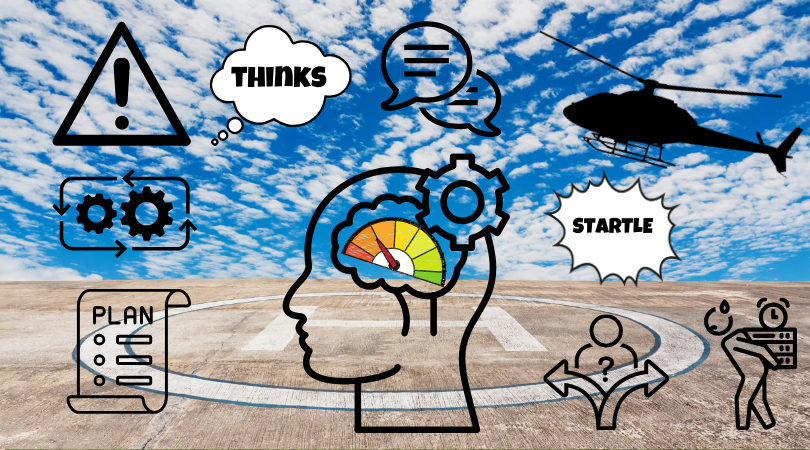
In this article from competent aviators.com Alex Pollitt examines the limits of cognitive performance and how we can mitigate cognitive overload.
Any conscious mental processing we do that focuses our attention results in cognitive workload. Workload management is about maintaining a balance between level of demand and the mental effort required to meet that demand based on our available resources. Demand can go up, but resource can also go down. When demand outstrips resource the outcome is a decline in performance.
We discuss how CRM training for experienced crews must move beyond reinforcing familiar concepts and instead focus on recalibrating judgement and behaviour in realistic operational contexts. Grounded in adult learning principles, effective training leverages experience, reflection, and authentic challenge to influence how non-technical skills are applied in line operations.
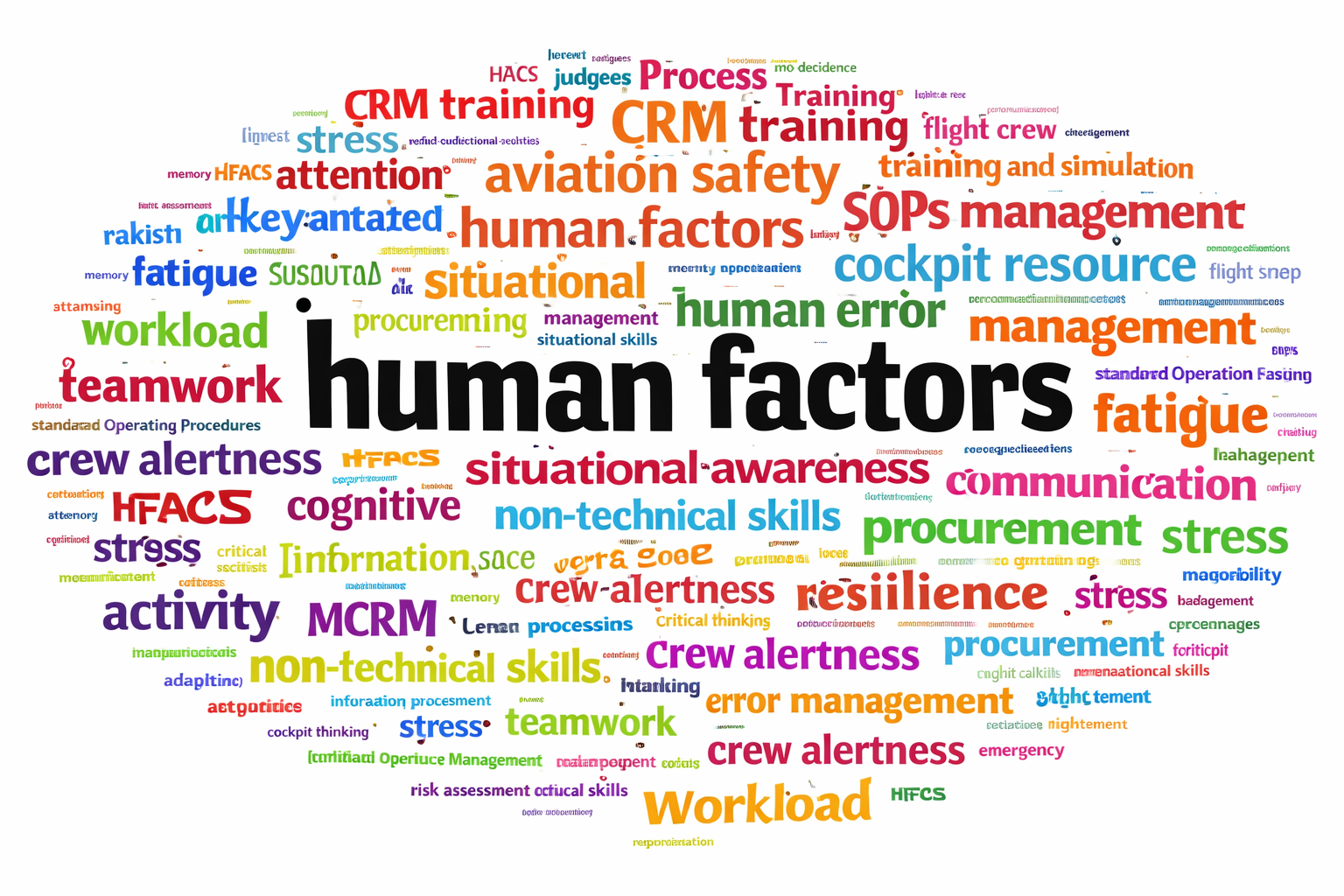
This brand new (2026) review by Okine and colleagues presents one of the most comprehensive examinations to date of how human factors (HF) research has evolved within aviation safety. What does it tell us about the growth and development of human factors in aviation, and are there any lessons in there for how we train crew resource management on the front line of aviation?
Old, but not outdated, these two documents from 1988 give an example of how trainers can develop scenario based, table-top exercises, to facilitate learning in non-technical skills.
In this post from LinkedIn, Aviation Psychologist and Human Factors Specialist Aleksandra Kapela discusses the importance of the instructor in CBTA implementation.
CRM K-Hub brings you an overview of this comprehensive, science-based checklist for CRM training design and delivery, intended to guide trainers through the full training life-cycle. Meant as a good primer for CRM trainers who are not familiar with core training principles.
We look at what a major new systematic review by Yiu et al. (2026) tells us about how artificial intelligence (AI) is rapidly changing the way aviation understands and manages human performance, with major implications for human factors research and Crew Resource Management (CRM) training.
This paper systematically reviewed published evaluations of CRM training effectiveness in order to quantify the impact of CRM on key outcomes such as learner reactions, attitudes, knowledge, and behaviours. It is significant because it provided one of the first quantitative syntheses showing that CRM has positive impacts on key human factors outcomes and validated CRM’s general effectiveness.