Machine learning methods for cognitive load analysis and classification in aviation

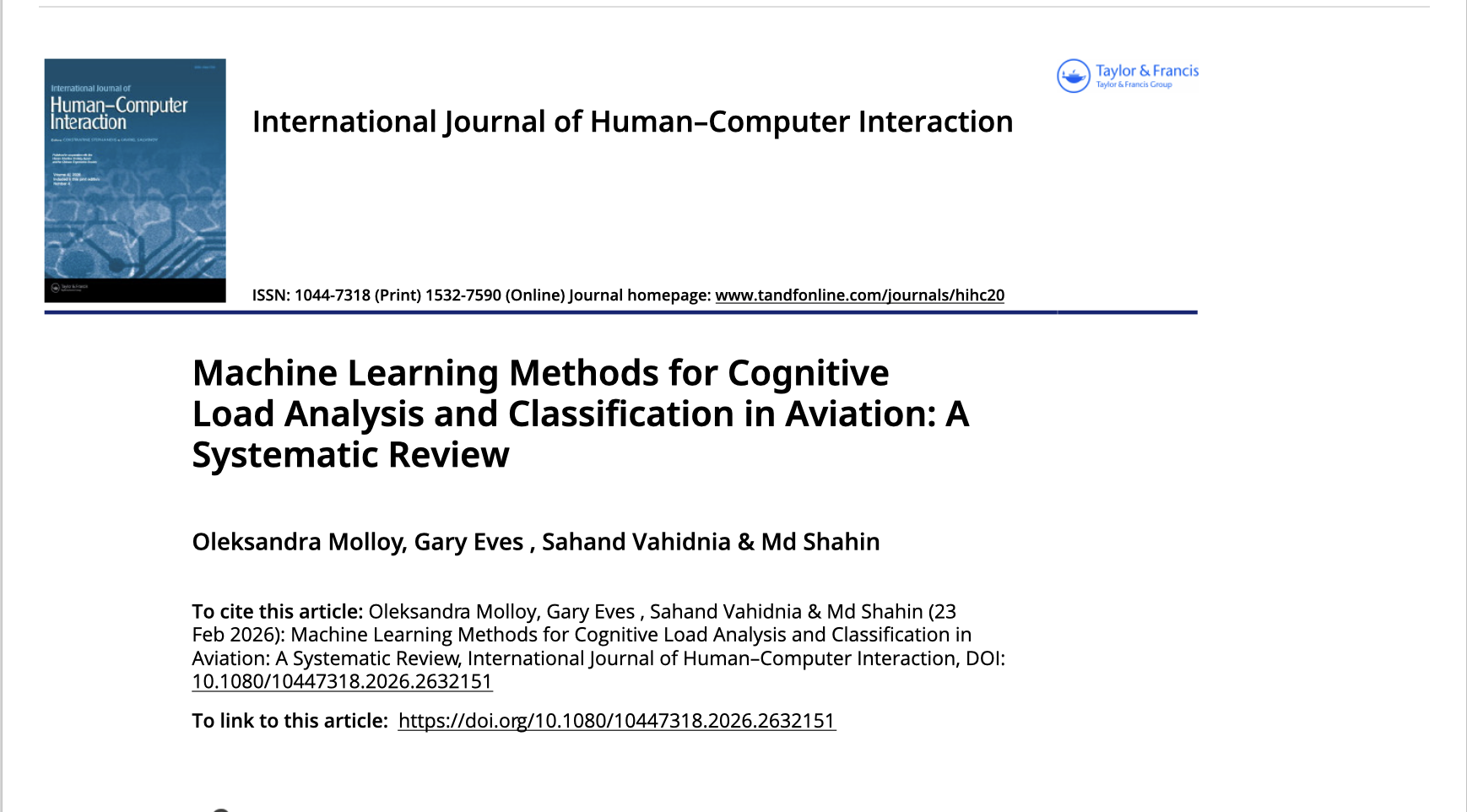
This 2026 systematic review by Molloy et al. highlights the growing role of machine-learning approaches in objectively assessing cognitive workload in aviation through physiological and behavioural data such as EEG, heart rate variability, and eye-tracking. For CRM and human-factors practitioners, the paper is significant because it demonstrates how advances in data analytics may allow workload to be monitored more accurately and potentially in real time, providing deeper insight into how workload influences situational awareness, decision-making, and crew coordination in complex operational environments

Aviation accident investigation analysis methodologies used by 12 government Safety Investigation Authorities

In this 2026 study, Bills, Costello, and Cattani present a rare inside look at how 12 leading government Safety Investigation Authorities (SIAs) actually analyse major aviation accidents.

The study maps the investigation models and analytical frameworks used in practice by investigators and compares them with both ICAO guidance and contemporary academic debate.

Crew resource management training effectiveness: A meta-analysis and some critical needs.

This paper systematically reviewed published evaluations of CRM training effectiveness in order to quantify the impact of CRM on key outcomes such as learner reactions, attitudes, knowledge, and behaviours. It is significant because it provided one of the first quantitative syntheses showing that CRM has positive impacts on key human factors outcomes and validated CRM’s general effectiveness.

Reflection of Crew Resource Management (CRM) Trainings to Real-Life Field Practice in Air Passenger Transportation: A Qualitative Research 

This study explores how CRM training translates into real operational practice from the perspective of cabin crew members in commercial air passenger transport. Findings indicate that CRM training positively influences situational awareness, communication, teamwork, stress and workload management, and proactive safety behaviors, suggesting that core non-technical skills are indeed carried over into the field

Skip to toolbar