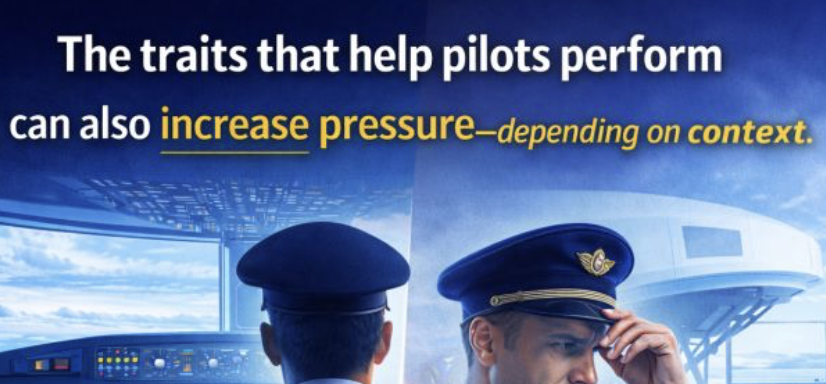
Lori Thomas raises the question of the impact of pilot personality traits on individual stress recognition and self regulation. An area of current research interest in aviation human factors is the inclusion individual cognitive management techniques and mental preparation into pilot training. One example of where aviation training can look for best practice in this area is elite sports, where athletes work closely with sports psychologists to develop psychological self-regulation, stress management and performance under pressure.
Mental performance training is quite common in the sports world, but not (yet) in aviation. Some are ahead of the game, as this episode from The Calm Cockpit shows. Tammy Barlette explains insights into performance coaching, and talks about her online training program.
SOURCE: Pilots who ask why Pilotswhoaskwhy.com examine the question of pilot mental health, including: TO ACCESS THE FULL ARTICLE – CLICK HERE
SOURCE: Pilots who ask why In this introduction to the key elements of fatigue management for pilots Pilots who ask why cover: To access the full article – CLICK HERE
This post on LinkedIn from aviation psychologist and helicopter pilot Carine Lage describes a mental health scenario based on a true account shared with her by a fellow pilot. It raises a debate about stress, fatigue, and pilot mental health that could be an interesting discussion point during CRM training sessions.
An easily readable source of quality information on the effects of stress and its impact on attention, decision making and teamwork, NASA’s technical memorandum Effects of Acute Stress on Aircrew Performance examines how situational stress influences pilot cognition and skilled performance in demanding flight conditions.
This paper proposes an emotions-based training approach for aviation crews that complements traditional Evidence-Based Training (EBT) and CRM by integrating mental preparation, self-awareness, and stress/emotion management techniques adapted from sports psychology.
Check out the JustMinds Institute Fatigue Risk Battery and the Momentary Fatigue Risk Gauge, a short, evidence-based tool intended to support awareness, training, research, and discussion around momentary fatigue and attentional risk.
This post from LinkedIn by A320 instructor pilot Mike Edelman looks at the power of controlled breathing in stress management.
Airline pilots are modern-day explorers, navigating the skies to connect the world. However, their demanding profession comes with unique environmental challenges that can impact both their short-term comfort and long-term health.
In this post, we’ll dive into the specific environmental stressors faced by pilots, their estimated cumulative exposure across different scenarios, and the potential health implications.