
 Written by
 SOURCE: Lori Thomas on LinkedIn
Positive Psychology Practitioner MSc., Clinical Hypnotherapist, and Pyschotherapist Lori Thomas raises the question of the impact of pilot personality traits on individual stress recognition and self regulation. An area of current research interest in aviation human factors is the inclusion individual cognitive management techniques and mental preparation into pilot training. One example of where aviation training can look for best practice in this area is elite sports, where athletes work closely with sports psychologists to develop psychological self-regulation, stress management and performance under pressure.
The impact of personality traits on self-regulation capability
Thomas notes that:
Personality traits have long been linked to human behaviour, and aviation has incorporated personality assessment into pilot selection for decades.
Research using the Five Factor Model consistently shows that pilots, on average, tend to score higher in conscientiousness and extroversion, lower in neuroticism, with similar or slightly lower agreeableness and generally average openness compared to the general population.
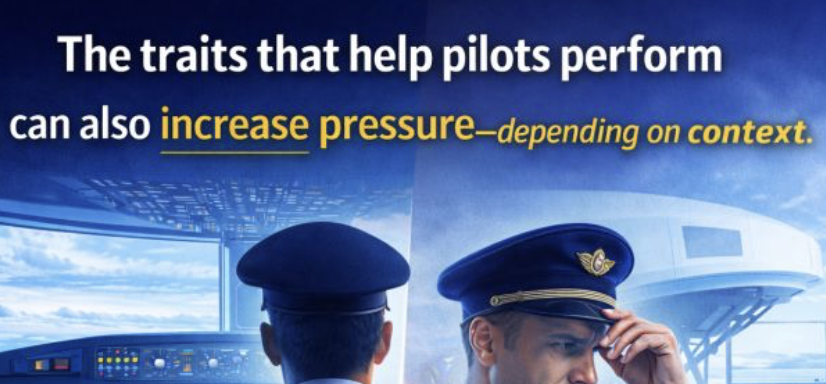
These traits support safety, discipline, decisiveness, and goal directed performance. They are strengths and an important part of why pilots perform so reliably in complex environments.
Under evaluation, such as SIM training, these same strengths can increase internal pressure for some pilots. High conscientiousness may drive self-monitoring and perfectionism, while a strong problem-solving orientation can narrow attention toward task execution and away from active physiological regulation. This doesn’t reflect vulnerability – it reflects how performance orientated traits could interact with perceived stakes.
Aviation already recognizes the importance of non-technical skills. CRM and NOTECHS frameworks explicitly target areas such as situational awareness, decision-making, communication, leadership, teamwork and self-management acknowledging that technical skills alone is not enough to support safe performance.
Mental preparation follows the same logic.
Simple, practical tools that support stress recognition and regulation – such as brief pre-task routines, breathing strategies, and in-task check-ins can compliment existing training frameworks by supporting human performance at the individual level, whether integrated formally or adopted personally.
This isn’t about altering who pilots are. It’s about understanding how strengths operate under pressure and supporting performance in context.