William R. Hoffman, MD is a neurologist and aircrew brain health researcher with an interest in aeromedical screening and healthcare behavior. He is an affiliated assistance professor of aviation at the University of North Dakota John D. Odegard School of Aerospace Science. He is an internationally invited speaker on pilot health behavior and leads the Aerospace Medical Association Mental Health Research Subgroup. In this video, he talks about pilot mental health (source: lovefly podcast):
Paul Cullen has been a vocal advocate for pilot mental health. Several of his studies are open access, and can be found through Google Scholar. The article below explores the impact of work-related stress (WRS) on pilots’ mental health and overall well-being, examining how stress factors influence their performance and resilience. It outlines common coping methods pilots use, such as training and personal strategies, to mitigate stress effects. The study emphasizes the importance of organizational support and tailored interventions to address stress in aviation settings effectively
Shorrock’s law of limits states that, âWhen you put a limit on a measure, if that measure relates to efficiency, the limit will be used as a target.â It was first articulated by Steven Shorrock with reference to the dynamics of Flight Time Limitations (FTL) in aviation. How many other procedural and regulatory limits within your flying activity can you think of where this law could be said to apply?
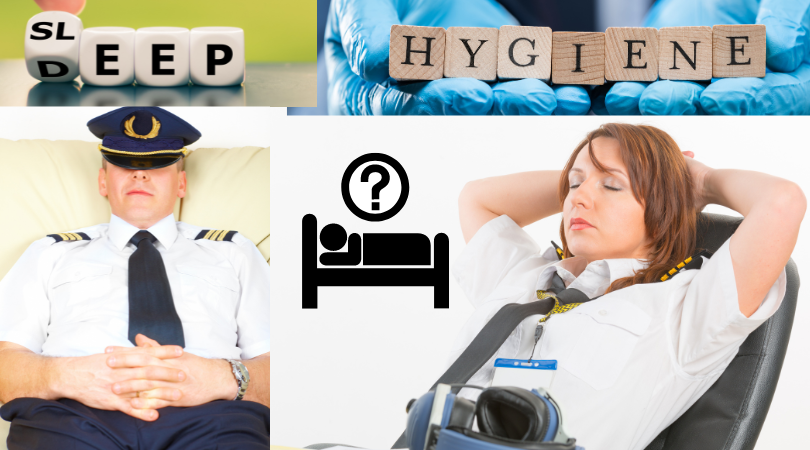
Sleep matters. And quality is what matters most. A set of practices and habits, called sleep hygiene, are essential to having good nighttime sleep quality and full daytime alertness. Konstantinos Pechlivanos lays out 15 tips for pilots to help to maintain their sleep quality. Check out the comprehensive list of references for further info on sleep.
Dr. Matt Walker, author of the book Why We Sleep, discusses sleep in this excellent podcast series. Many episodes are relevant for aviation, for example, What is Sleep, Sleep and Caffeine, Sleep and Alcohol and many more.
In this brilliant series by Human Factors for Healthcare Stress and Fatigue are discussed. Lots of overlap with aviation.
Sleep inertia is the period of impaired performance and grogginess experienced after waking. This period of impairment is of concern to workers who are on-call, or nap during work hours, and need to perform safety-critical tasks soon after waking. While several studies have investigated the best sleep timing and length to minimise sleep inertia effects, few have focused on countermeasures -especially those that can be implemented after waking (i.e. reactive countermeasures). This structured review summarises current literature on reactive countermeasures to sleep inertia such as caffeine, light, and temperature and discusses evidence for the effectiveness and operational viability of each approach.
Paul Stevens, expert in aviation English from Mayflower College, U.K. offers a point brief in how fatigue can effect our operational communication. Source: LinkedIn đ€ FATIGUE AND ITS EFFECT ON COMMUNICATION IN AVIATION âïž Fatigue is a hot topic in aviation. We know that fatigue can negatively impact our: â« Reaction times â« Situational awareness […]