
 Written by
 SOURCE: Aleksandra Kapela on LinkedIn
In this post from LinkedIn, Aviation Psychologist, Human Factors Specialist and founder of MyWingman.eu Aleksandra Kapela argues that most CBTA programmes start in the wrong place…
For the full source post on LinkedIn – CLICK HERE
Kapela goes on to discuss the importance of the instructor in CBTA implementation:
When organisations talk about “implementing CBTA,” the first steps are usually predictable: manuals are updated, Ops documents revised, new terminology appears, and the topic gets another hour (wooow 😉)added to”as short as possible” CRM training. It looks like a change on paper, but in everyday training practice, very little actually shifts.
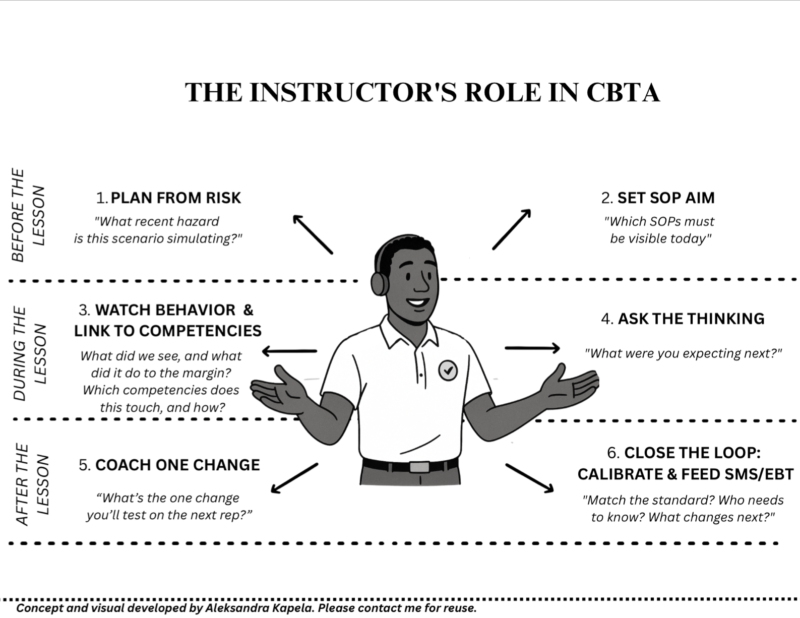
Because CBTA doesn’t start in documents. It starts with instructors If we want CBTA to work, we need to start elsewhere – with how instructors think and operate before, during, and after a lesson.
👉 𝐁𝐞𝐟𝐨𝐫𝐞 𝐭𝐡𝐞 𝐥𝐞𝐬𝐬𝐨𝐧, CBTA already exists in the planning. When an instructor builds a scenario around operational risk rather than the syllabus alone, decides which SOPs must be visible and why, and defines “good performance” in terms of safety margins, they are already working in a competency-based way – even if no form has been opened yet
👉 𝐃𝐮𝐫𝐢𝐧𝐠 𝐭𝐡𝐞 𝐥𝐞𝐬𝐬𝐨𝐧, the focus moves away from task completion and towards behaviour. What did the pilot do to the margin? Which competencies were activated under pressure? How did expectations and mental models shape the decisions made? CBTA becomes real here, not through scores, but through observation and questions that explore thinking rather than simply pointing out errors.
👉 𝐀𝐟𝐭𝐞𝐫 𝐭𝐡𝐞 𝐥𝐞𝐬𝐬𝐨𝐧 is where CBTA either becomes learning or quietly collapses into routine. Coaching 𝒐𝒏𝒆 clear, testable change for the next repetition matters far more than long lists of generic feedback. Calibration against standards, and feeding patterns back into SMS or EBT, is what turns individual lessons into organisational learning rather than isolated events.
This is why instructor competence is not just important in CBTA – it is decisive.
You can have aligned competencies, modern terminology, and beautifully written manuals, and still run very traditional training if instructors are treated mainly as deliverers of exercises rather than interpreters of risk and behaviour. 🤷♀️
CBTA does not make the instructor’s role easier. It makes it more cognitive more reflective, and more influential.