FlightSafety Foundation’s practical guide for improving FPM can be found here.
 Written by Daan

FlightSafety Foundation’s practical guide for improving FPM can be found here.
Written by Daan
One of the first research efforts into startle and surprise management. The attached report is written by the Dutch NLR on the initiative of EASA.
Written by Daan
In this excellent excerpt printed in the “Scientific American” the essence of Kahnemann’s famous book is brilliantly described.
Written by Daan
The well-known accident in Tenerife in 1977, where two 747’s collided on the runway, has made training in speaking up about safety concerns an essential element of pilot CRM training. Recent research by Noort et al. (2021) shows that there is another dimension to this issue that has been given less attention in our training: safety listening.
Written by Daan
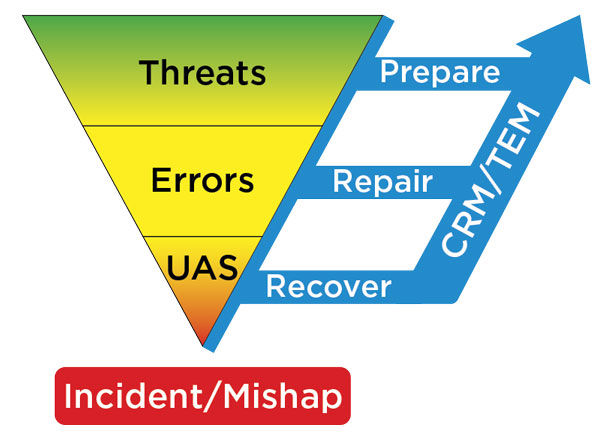
In this paper Capt Dan Maurino gives an excellent explanation of what TEM actually is.
Written by Daan
In this video, psychologist Gary Klein, explains how experts take decisions. His research into decision making by firemen was groundbreaking. As pilots, we are also experts taking decisions under uncertainty and a lot can be learned from this video.
Written by Daan
In this interesting episode of the “Safety of Work” podcast, David and Drew delve into what makes a good PowerPoint presentation. They explore the evolution of PowerPoint and its importance in modern business communication, referencing Associate Professor Mitch Ricketts’ 2018 paper, “No More Bullet Points: Research-Based Tips for Better Presentations.”
Written by Daan
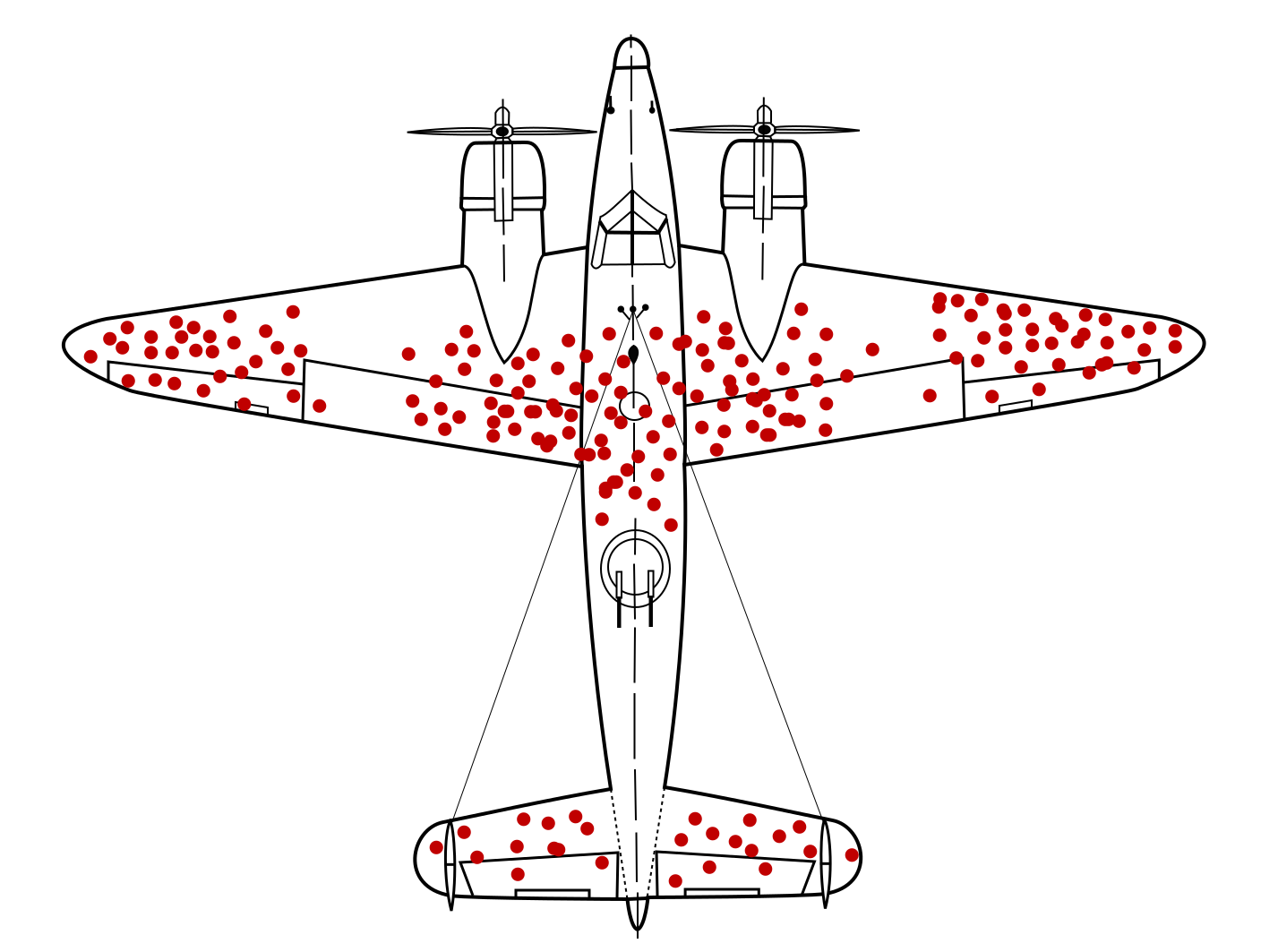
Biases arise from heuristics—mental shortcuts we take subconsciously to avoid mental overload and make quicker decisions. However, these quicker decisions are not always optimal. Although we consider ourselves rational, pilots are not immune to these biases. A recent paper by Nadri et al. (2024) calls for more cognitive bias training in pilots. Here we explore a few common cognitive biases that can influence decision-making in aviation and look and what we should be teaching on biases in CRM training.
Written by Daan
Critical thinking has been around since the days of Socrates. In this article we look at critical thinking training for pilots.
Written by Daan