
 Written by
 Source: Daan
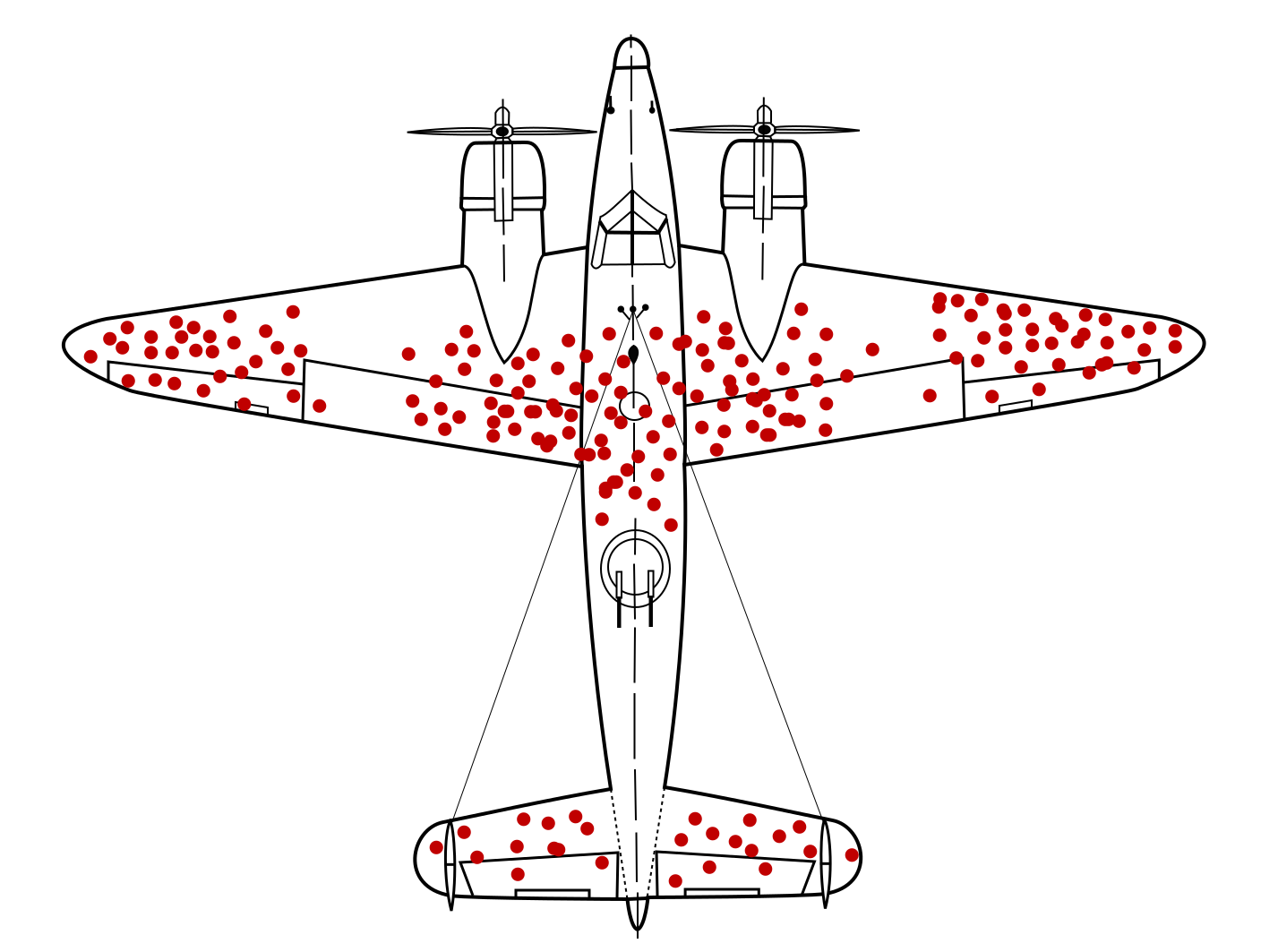
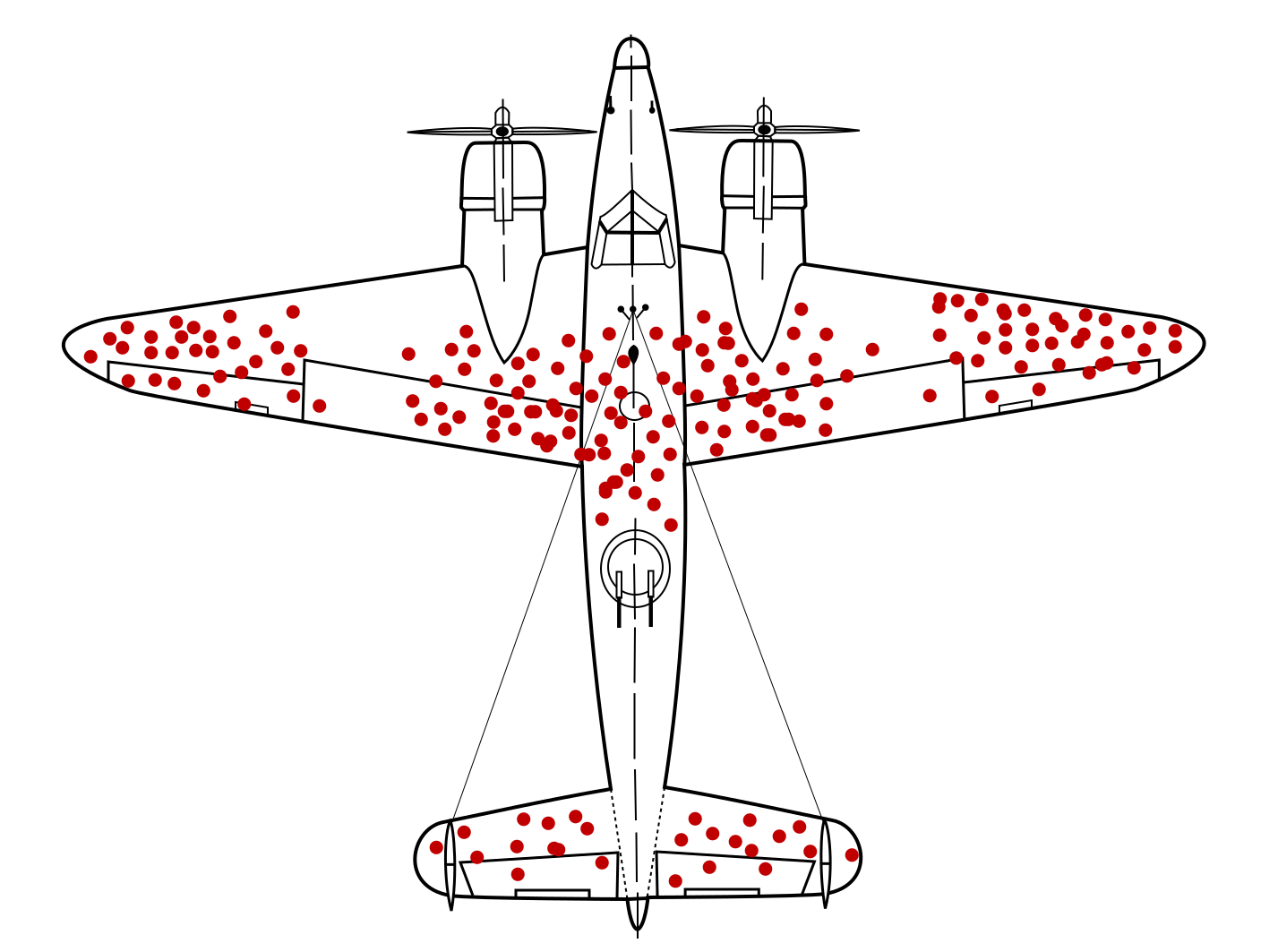
Abraham Wald was a brilliant mathematician. During WWII he was asked by the Allied Forces how to best reinforce their planes to reduce losses from enemy fire. The natural assumption was to reinforce the areas with most damage to protect future planes. However, Abraham Wald, a mathematician working with the Statistical Research Group (SRG) at Columbia University, proposed a different approach. Wald realized that the planes being examined had survived their missions. The bullet holes on these planes indicated areas where the planes could sustain damage and still make it back safely. Therefore, the bullet holes showed where reinforcement was least needed. The areas with little or no damage on the returning planes were the critical spots—because planes hit in these areas were more likely to be lost and, thus, never made it back to be studied. Wald recommended reinforcing the areas that showed fewer bullet holes on the surviving planes, as these were likely the spots that, when hit, led to the planes being shot down. His insight helped save countless lives by improving the design and survivability of the aircraft. This is a brilliant example of critical thinking.
Critical thinking was already used by Greek philosophers such as Socrates, who invented the Socratic method: asking continuous probing questions. Critical thinking deals with actively questioning received information, rather than being a passive recipient. It can be helpful to reduce the influence of bias in decision making and improve the quality of decisions.
Figure 1. Hypothetical image of Abraham Wald’s analysis of damaged planes (Source: Wikipedia).
In aviation, many decisions are made in a dynamic, rapidly changing, environment full of uncertainty. According to Cohen & Thompson (2001) proficient decision makers such as pilots are “recognitionally skilled”. That means they often use earlier experiences to quickly retrieve an appropriate response from memory. This style of expert decision making was also described by Gary Klein in his literature on Naturalistic Decision Making (Klein, 2008). This recognition style of decision making is then ideally supplemented by processes to verify and improve the results of the decision that was made – critical thinking.
Critical thinking can result in the discovery of three kinds of problems (Cohen & Thompson, 2001): incompleteness of information or conclusions, a conflict between the overall picture of the situation and the perceived information, and unreliability of the conclusions, often due to assumptions that are made. Focusing attention on the sources of information or the conflicting goals can resolve this. This can be done actively by the pilots by asking the following three questions:
- Did we miss any information? For example, did we gather information from air traffic control, cabin crew or any other source? Did we check the NOTAMS?
- Is there a goal conflict? For example, does the diversion to the airport with a long runway conflict with the fuel state?
- Did we make any assumptions? For example, are we sure the diversion airport is open and has the necessary facilities?
When using a decision tool like T-FORDEC or T-DODAR it is important to realize that, if time is available, this technique can be used at any point in the decision-making process. The questions should not only be pondered in silence, but also be discussed with fellow crew members, that might have information or ideas that the other pilot had missed. This improves shared situation awareness. Keeping a critical eye on the quality of the information gathered, the goal of the decision and being aware of assumptions and biases will improve the quality of flight crew decisions.
Sources and References:
https://nl.wikipedia.org/wiki/Abraham_Wald
Cohen, M. S., & Thompson, B. B. (2001). Training teams to take initiative: Critical thinking in novel situations. Advances in human performance and cognitive engineering research, 1, 251-292.
Klein, G. (2008). Naturalistic decision making. Human factors, 50(3), 456-460.