This article from NAVIMINDS.COM introduces us to expectation bias, examines some case study examples of where it has played a role in aviation accidents, and looks at possible mitigation strategies.
 Written by K-HUB

This article from NAVIMINDS.COM introduces us to expectation bias, examines some case study examples of where it has played a role in aviation accidents, and looks at possible mitigation strategies.
Written by K-HUB
Understanding the EASA requirements for CRM trainers can be a daunting task. With the CRM regulations constantly evolving we link you to this handy summary of current (summer 2024) EASA requirements for becoming qualified and remaining current as a CRM trainer, which might be particularly useful for smaller operators.
Written by K-HUB
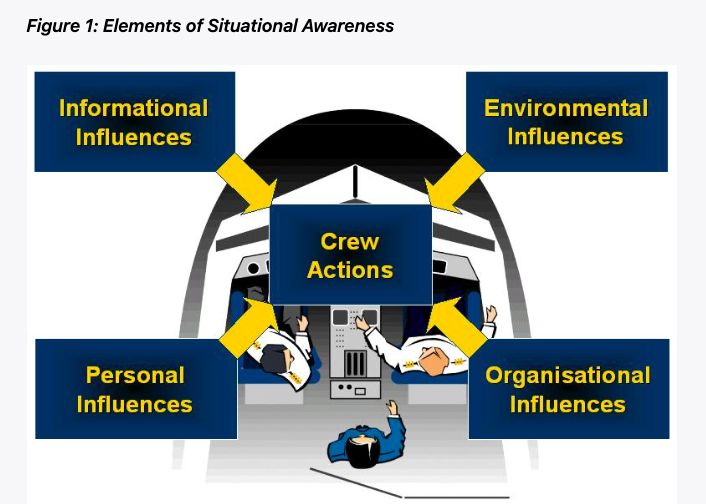
This Flight Safety Foundation briefing note presents a definition of situational awareness. It explains the complex process of maintaining situational awareness, focuses on how it is lost and proposes prevention and recovery strategies.
This briefing note is intended to help the reader gain and maintain situational awareness, to prevent falling into the traps associated with its loss and to avoid the negative effects of its loss on flight safety.
Written by K-HUB
The CRM Knowledge Hub links you to this presentation (PDF) by the aviation consulting group TACG Worldwide. The presentation is an example of a basic introduction to human factors concepts in aviation and includes some case study examples.
Written by K-HUB
The team at FlyDubai offer us a podcast that explores Human Factors in aviation. For anyone interested in how Human Factors and aviation come together, and what the key areas are that we focus on, season one lays out all the basics. This episode looks at one of the building blocks of CRM – how we process information.
Written by K-HUB
This podcast episode welcomes Nicholas Dahlstrom, Human Factors Manager at Emirates Airline. A prominent figure in Aviation Safety Training and Crew Resource Management, the discussion revolves around the current state and future of CRM, especially from the lens of Emirates Airlines where he has brought about significant change. His insights prove invaluable for anyone intrigued by aviation safety, human factors, CRM, and the delicate task of merging traditional knowledge with innovative methods. Plug in as Dr. Dahlstrom illustrates the power of CRM in enhancing safety and boosting efficiency. A must-listen for all safety professionals!
Written by K-HUB
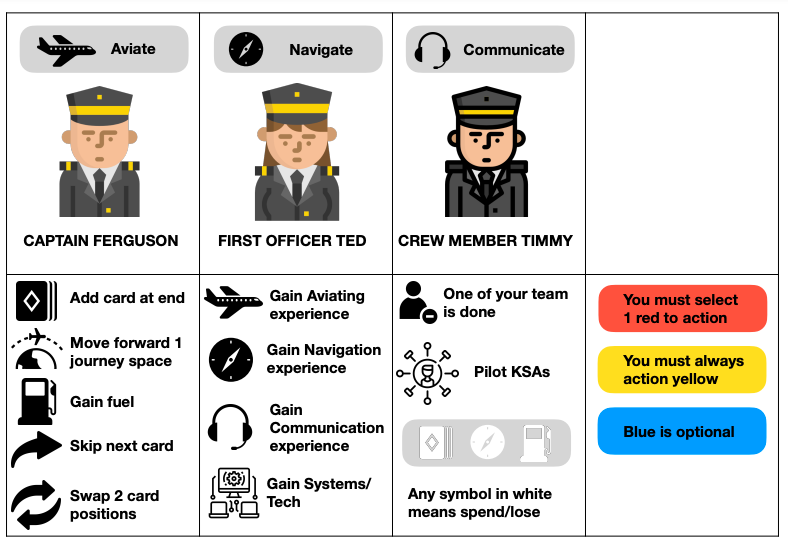
A card game you can download and print out TO HELP DEVELOP PILOT prioritisation and decision making skills. STRATEGY AND LUCK BASED, LEAD YOUR AIR CREW THROUGH A SERIES OF EVENTS ON EACH SECTOR to TRY TO GET THE AIRPLANE SAFELY THROUGH THE OPERATION.
Written by K-HUB
This Briefing Note from the Flight Safety Foundation discusses the causes and consequences of interruptions and distractions and describes techniques for reducing and dealing with them. The focus in this material is on practical actions for both individual flight crew members and their companies.
Written by K-HUB
This episode of the Safety at Work podcast
explores the complex world of risk perception and decision-making, by examining the foundational work of Paul Slovic, whose groundbreaking research has significantly shaped our understanding of how humans evaluate risk. Through the lens of Slovic’s influential 2004 paper “Risk as Analysis and Risk as Feelings,” the team uncover the intricate interplay between analytical reasoning and emotional intuition in safety management.
Written by K-HUB
In this scientific paper, leading Human Factors scientist Paul Salmon reviews the relevance of the term human error and asks whether it still a useful concept in practice. Has it become misleading, inappropriate, or even dangerous? The authors offer a set of recommendations on ‘error management’ based on their conclusions.
Written by K-HUB