This study systematically compared Crew Resource Management (CRM) in commercial aviation with Single-Pilot Resource Management (SRM) in general aviation to assess how each contributes to safety outcomes.
 Written by K-HUB

crm by topic
This study systematically compared Crew Resource Management (CRM) in commercial aviation with Single-Pilot Resource Management (SRM) in general aviation to assess how each contributes to safety outcomes.
Written by K-HUB
This review paper by Okine, Zarei, Roggow, and Dehghan (2025) provides a high-level map of how human factors (HF) research in aviation safety has evolved and where it is heading. Recent growth reflects increasing attention to organisational factors, safety management, and the interaction between humans, technology, and complex operational environments.
Written by K-HUB
There was a time not so long ago when pilots spoke of CRM frequently and often…this opinion piece from Flightsafety.org discusses some of the challenges faced by CRM training and the changes that have taken place in the last 20 years.
Written by K-HUB
Check out the JustMinds Institute Fatigue Risk Battery and the Momentary Fatigue Risk Gauge, a short, evidence-based tool intended to support awareness, training, research, and discussion around momentary fatigue and attentional risk.
Written by K-HUB
This post from LinkedIn by A320 instructor pilot Mike Edelman looks at the power of controlled breathing in stress management.
Written by K-HUB
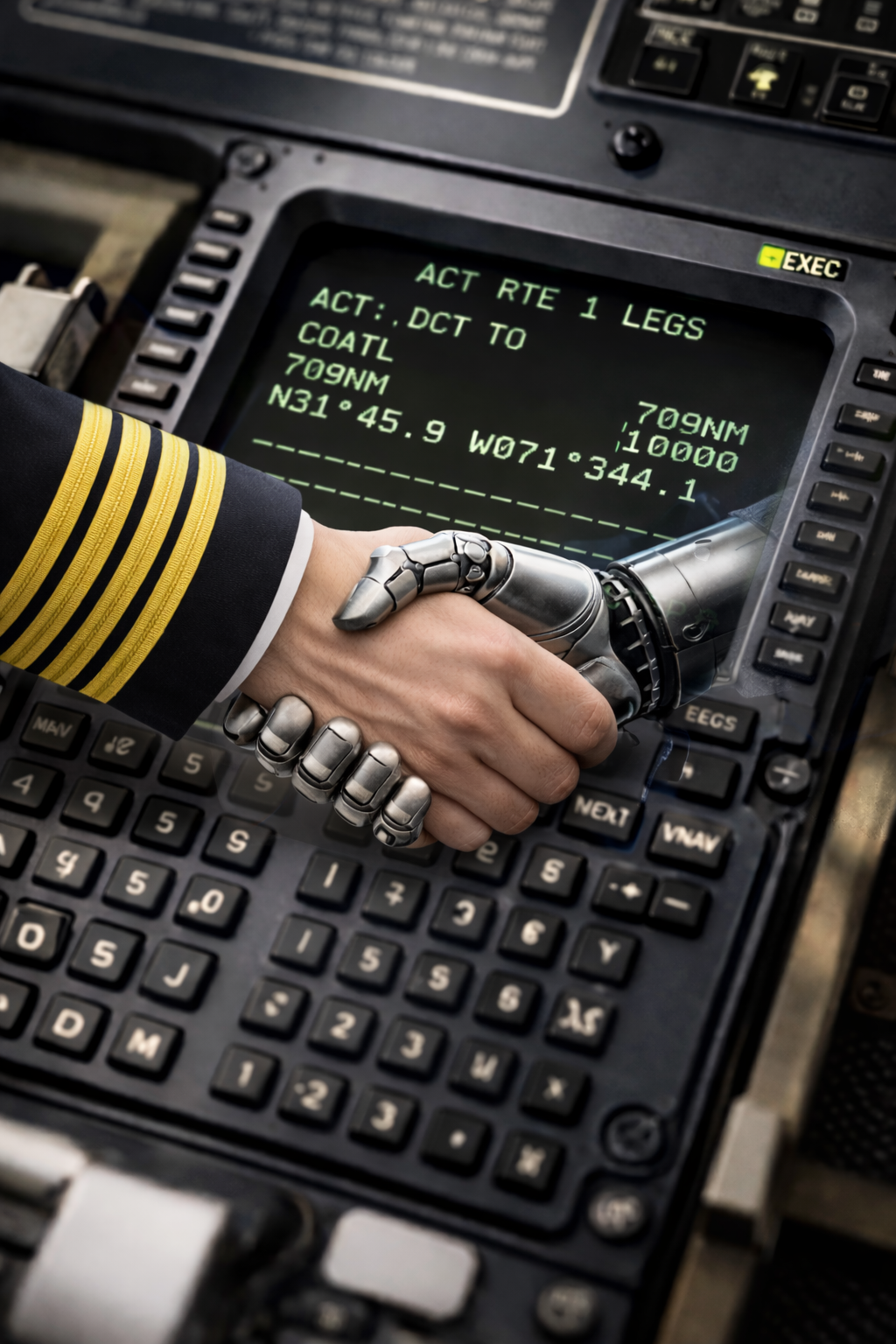
Little time is spent discussing the critical role played by the concept of trust in our interactions with automation. While automation-related incidents are often framed as failures of systems knowledge, this article argues that they are more accurately understood as failures of trust calibration. We explore what is meant by trust in this context, and how it determines our reliance, use, misuse, or indeed, disuse of automated systems.
Written by K-HUB
A classic image challenging our perceptive processes from this piece on LinkedIn by Professor Eduardo Blanco-Muñoz where he goes on to discuss the importance of salience in our perceptive processes.
Written by K-HUB
In this handy overview, Jared Peterson explains the different decision making theories in a handy summary.
 Written by Daan
This is episode 127 in the series of safety podcasts from David Provan and Drew Rae at the Safety Science Innovation Lab in Australia. In this episode, they discuss research which challenges traditional distinctions between ‘hard’ and ‘soft’ skills. They argue for an educational approach that develops both technical and narrative capabilities in an integrated manner.
Written by K-HUB
This article, originally posted on LinkedIn by Hessel Van Der Maten, from the Dutch Aviation Safety Board describes the value in cultural curiosity, asking yourself questions about your own cultural biases, and the influence of (often unconscious) cultural pressures on different stakeholders. Van Der Maten discusses Cultural Intelligence from the perspective of safety investigation, but the points he makes can be applied universally. Let’s not forget that aviation is an almost uniquely multi-national and multi-cultural environment so these considerations are more relevant to the industry than almost anywhere else.
Written by K-HUB