
This review study examines how Crew Resource Management (CRM) has evolved since its introduction in the late 1970s and asks what the next generation of CRM training should look like. By questioning whether current CRM models are keeping pace with technological and operational change, the article contributes to an ongoing discussion about how pilots should be trained to manage uncertainty, complexity, and human-machine interaction in the next era of aviation.
This article by Cedric Paillard on aviationtraining.ai explores one of the challenges of modern aviation training. While Competency-Based Training and Assessment (CBTA) improves how pilot performance is measured, does it fall short in addressing the deeper cognitive processes behind decision-making, adaptability, and resilience under pressure?
This article by Capt. Y. A. Franciosa from Aviomar Flight Academy titled The Art of Debrief, highlights one of the most valuable yet sometimes overlooked aspects of pilot training: the effective debrief.
The IATA Competency Assessment and Evaluation for Pilots, Instructors and Evaluators guidance material provides a comprehensive, practical framework for how competency-based training (including EBT) should be assessed and evaluated, defining standardized methods for observing behaviours, classifying performance against competencies, and grading using structured models such as observable behaviours and TEM outcomes.
In this article from www.competentaviators.com, Alex Pollitt examines a 2023 study into the role and impact of AI in future aviation training.
This article by instructional development specialist Dr Doug Farrow, explains how Competency-Based Training and Assessment (CBTA) has become a broad training framework used across many industries, not just aviation, and is understood under various labels like performance-based or outcomes-based training.
The Flight Crew Competency-Based Training (CBT) Framework for Offshore Helicopter Operations outlines a standardized system for developing helicopter pilots based on demonstrated competence rather than minimum flight-hour requirements.
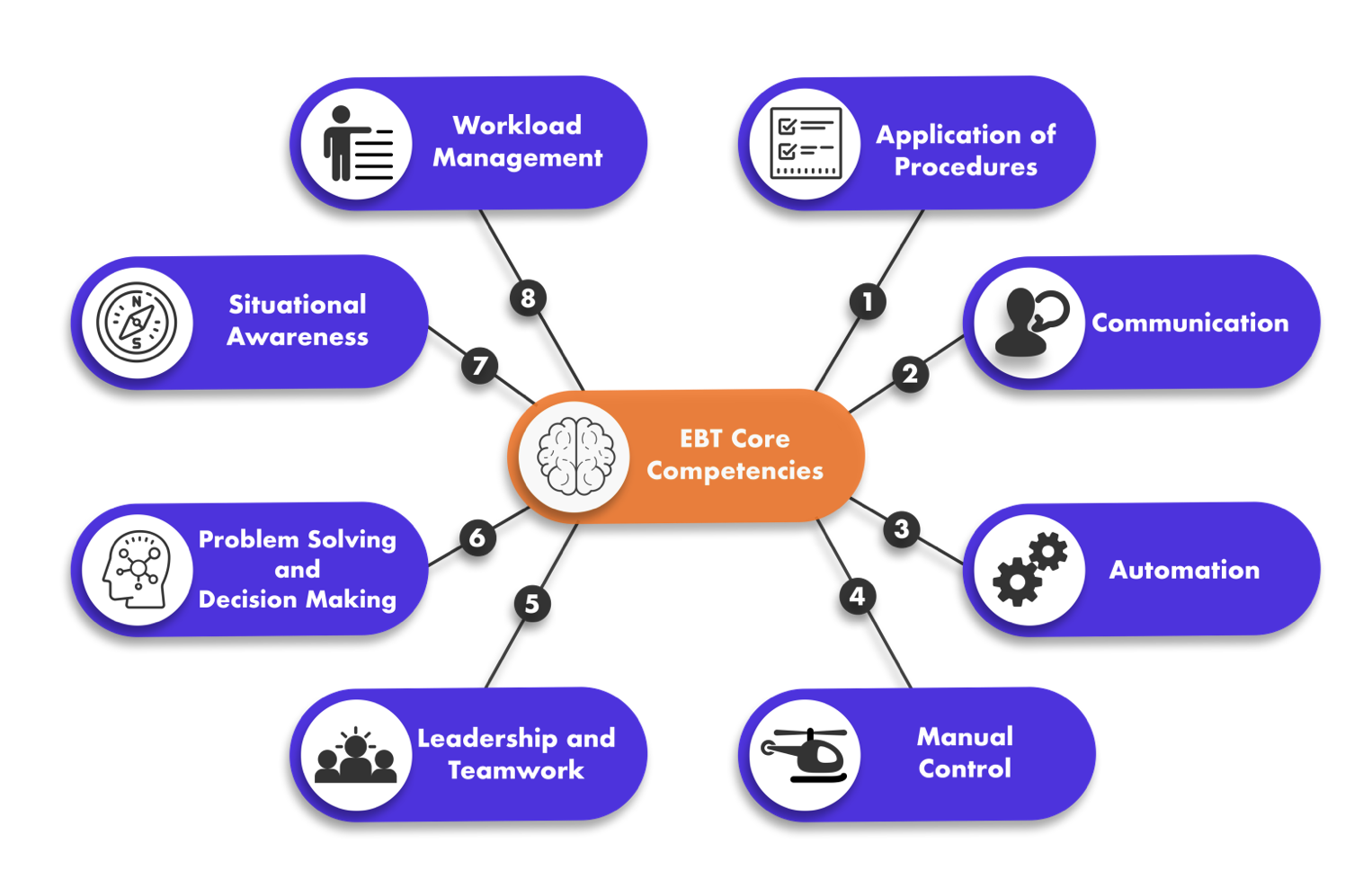
SOURCE: Pilots who ask why This summary from Pilotswhoaskwhy is a good primer for those not familiar with or wanting to refresh on the core concepts of Evidence Based Training (EBT). Jop Dingemans looks at what EBT means, where it came from, and what the benefits are including a breakdown of the core pilot competencies. CLICK […]
The short paper linked here provides an overview of Sweller’s Cognitive Load Theory, which is widely used in instructional design. It is particularly useful for designing instruction that optimizes cognitive load for learners with different levels of expertise.
For CRM developers, the theory offers concrete guidance on how to avoid unnecessary cognitive load.
For those CRM Trainers who are designing interactive or scenario-based facilitation sessions, check out this source of inspiration and assistance for planning and conducting team training.