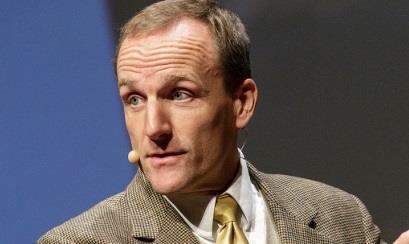
Professor Sidney Dekker explains what safety differently (or the new view of safety) is. Three organisations are followed, one in resources, one in healthcare and one in retail.
 Written by Daan

HUMAN FACTORS IN AVIATION
Professor Sidney Dekker explains what safety differently (or the new view of safety) is. Three organisations are followed, one in resources, one in healthcare and one in retail.
Written by Daan
A classic book on decision making. Seminal work on Naturalistic Decision making.
Written by Daan
In this series of 3 podcasts, David Provan and Drew Rae explain the full story behind safety I and II.
Written by Daan
In these three episodes of The Safety of Work, David Provan and Drew Rae explain the full story of Just Culture.
Written by Daan
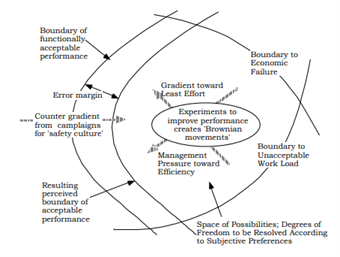
A great description of how accidents happen based on Rasmussen’s safety model
Written by Daan
In this interesting paper, Don Harris and colleagues look into the interrelationship of the various pilot competences and present their CRM dynamic model.
Written by Daan
The CRM Knowledge Hub links you to this presentation (PDF) by the aviation consulting group TACG Worldwide. The presentation is an example of a basic introduction to human factors concepts in aviation and includes some case study examples.
 Written by K-HUB
This episode of the Safety at Work podcast
explores the complex world of risk perception and decision-making, by examining the foundational work of Paul Slovic, whose groundbreaking research has significantly shaped our understanding of how humans evaluate risk. Through the lens of Slovic’s influential 2004 paper “Risk as Analysis and Risk as Feelings,” the team uncover the intricate interplay between analytical reasoning and emotional intuition in safety management.
Written by K-HUB
In this scientific paper, leading Human Factors scientist Paul Salmon reviews the relevance of the term human error and asks whether it still a useful concept in practice. Has it become misleading, inappropriate, or even dangerous? The authors offer a set of recommendations on ‘error management’ based on their conclusions.
Written by K-HUB
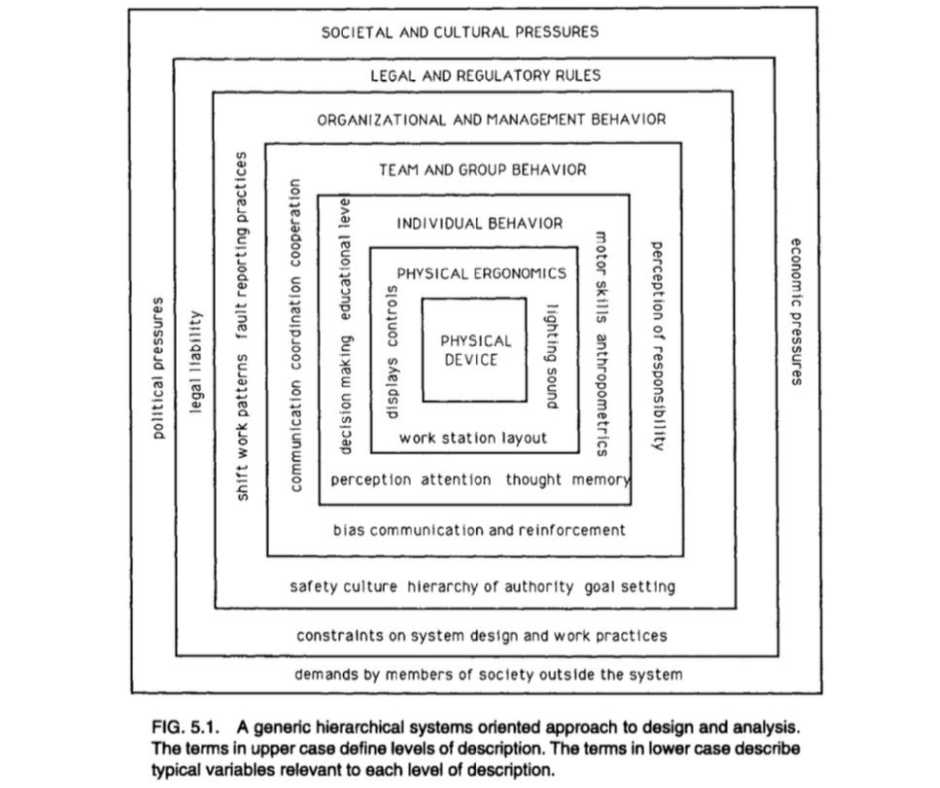
Neville Moray, professor in cognitive psychology, applied psychology and ergonomics developed this model of concentric layers, each representing a different level of description of human-machine systems interaction. It ranges from the specifics of the machine to the most broad and encompassing influences on human-machine systems.
Written by K-HUB