
 Written by
 Source: Martijn Flinterman on LinkedIn
Neville Moray, professor in cognitive psychology, applied psychology and ergonomics developed this model of concentric layers, each representing a different level of description of human-machine systems interaction. It ranges from the specifics of the machine to the most broad and encompassing influences on human-machine systems.
The innermost layer represents the tangible equipment or tool being used.
The first surrounding layer considers the ergonomic factors such as work station layout, displays, controls, lighting, and sound. These elements directly impact the interaction between the human and the machine. The third layer contains the psychological and physical attributes affecting performance, including perception, attention, thought, memory, decision-making, educational level, and motor skills. Next, we have team factors like communication, coordination, cooperation, and the perception of responsibility.
Surrounding the team factors, we find the broader organizational formal and informal structure, including hierarchy of authority, goal setting, and constraints on system design and work practices, influenced by policies and practices.
Surrounding all this, there is the legal and regulatory framework governing the use of the system. The outermost layer represents the societal and cultural context, including influences such as political pressures, economic pressures, and demands by members of society outside the system.
Moray suggested an understanding that integrates these broader influences. His approach shows the complexity of human behaviour and the necessity of considering various levels of influence to design effective and reliable systems.
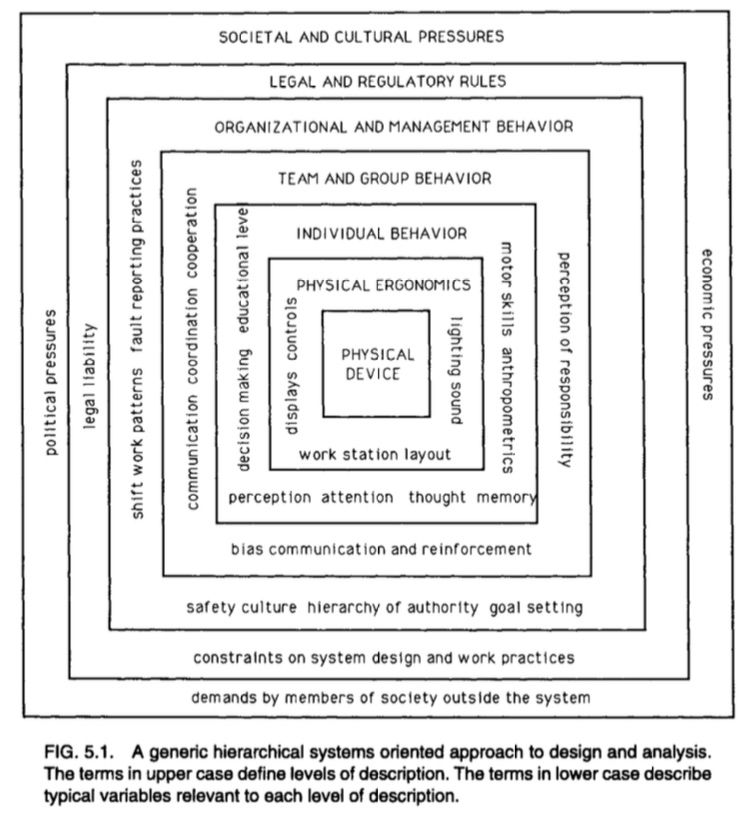
Figure Source: Moray, N. (2004), Culture, Context and Performance, In M. Kaplan, (ed.), Cultural Ergonomics, Amsterdam: Elsevier, pp. 31 – 60.