
 Written by
 SOURCE: 1-MINUTE INSIGHT FROM CIEHF on LinkedIn
This one minute insight posted by the Chartered Institute of Ergonomics and Human Factors on its LinkedIn page addresses an important distinction in human factors.
Just because something is complicated doesn’t mean it’s complex. This is an important distinction in human factors.
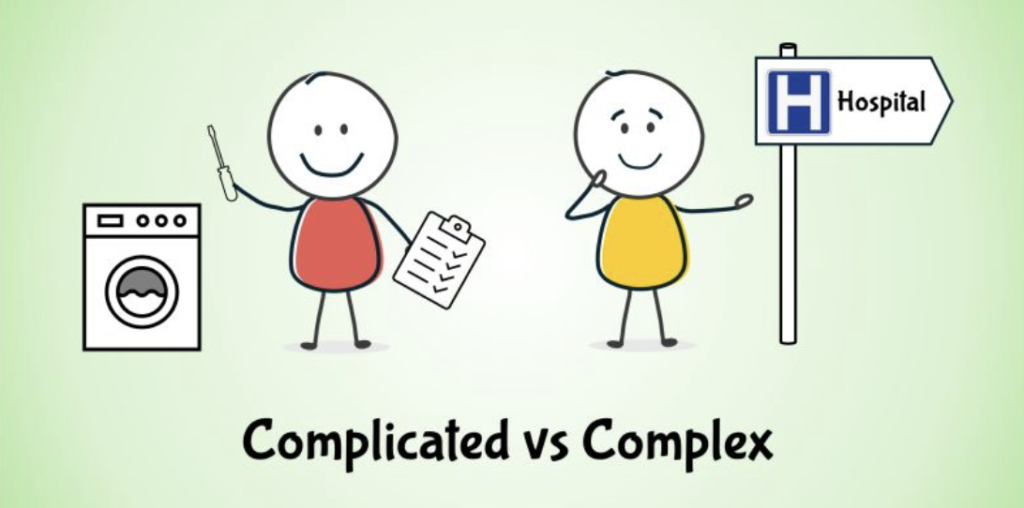
A complicated system has many parts, but they fit together in predictable ways. Think of something like a watch, a tax form or a washing machine: fiddly, detailed, technical but if you understand the components, you can make it work.
A complex system is different. It also has people in it – interacting, adapting, improvising, creating workarounds. It has many other interacting elements and outcomes that are harder to predict. Healthcare, aviation operations and emergency response are complex systems.
In complex environments small changes may have unexpected effects, situations can evolve quickly but most importantly, people are resilient and constantly adapt to keep things working.
If we design as if everything is complicated rather than complex, we end up with rigid processes that fall down the moment real life shows up becuase its messy and unpredictable.
So understanding the difference between complicated and complex is important and this is a key strength of human factors. It has the tools and techniques, and the expertise in its professionals, to study and understand complex systems.
What examples have you got that illustrate the difference between complicated and complex?