
 Written by
Chapter 1 on Information Processing from the Flight Crew HF Handbook gives a brief theoretical foundation on how humans process information for subsequent (more applied) chapters.
Source: CAP737 Flight Crew Human Factors Handbook Feb 2023 ed.
IATA (2022) competencies under-pinned by this section are:
C2 – Communication
C4 – Aeroplane Flight Path Management (manual control)
C5 – Leadership and teamwork
C6 – Problem Solving and Decision Making
C7 – Situation Awareness and Management of Information
C8 – Workload Management
Knowledge
‘Information Processing’ models are a traditional attempt to create simple
frameworks for understanding how the brain responds to incoming
information. They are relevant to areas including situation awareness and
decision-making.
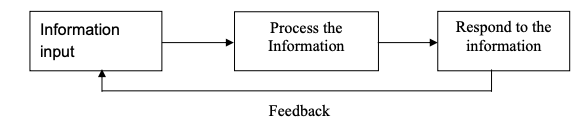
At the most basic level we can think of three fundamental stages: ‘information
input’, ‘processing’, and ‘response’ (input, process, output). It is useful to
consider information processing as a very simplified system that includes a
feedback loop, because most actions (output) will change or create further
input.
Input (information in)
The human brain is on a constant quest to extract meaning from the world.
When senses are stimulated (e.g. a sound or sight) the stimuli are
unconsciously interpretated by a process called ‘perception’. This extracts
initial meaning and determines whether the stimuli represent something
unexpected. This process might result in the stimuli being given further
scrutiny and/or attention. Basically, for new incoming information to reach a
stage where it is consciously processed (thought about), it must be sensed
(stimuli), perceived to have meaning to the organism (human), and/or noticed (attention drawn).
Processing (process the information)
Processing is the interpretation and consideration of perceptions (and other information including memories). In this simple form, it is a mental activity that includes making decisions and deploying skills. Processing can be conscious, unconscious, or may use a mix of both. Hypothetically dividing mental processing into two types of processes (such as unconscious and conscious) is given the general name ‘dual process theory’ and has a history going back to Freud and beyond. The topic is very complex, and there are many debates within it. In a nutshell, there is some validity in a simplified hypothesis of two general types of mental processes that roughly align with intuition and reflection. The first type of process is unconscious, fast and involves no perceptible workload. The second type is conscious, slow and generates workload. These themes have been emerging in parallel for many decades across domains in psychology and neuroscience and were given the generic categorical labels ‘System 1’ and ‘System 2’ by Keith Stanovich (1999) to reflect the breadth of the all -encompassing notion being proposed.
The first category of processing is effectively unconscious and automatic and
may not catch our attention at all. It has comparatively little impact on mental
workload. Such processing can be innate and intuitive, or learned, and hence
it can manifest itself within decision making, skills, social interactions, etc.
The second category of processing is conscious, and would be exemplified
by processes such as hypothesizing, assessing, calculating, analytical
decision-making, or any other thought processes that can be referred to as
‘consideration’ or ‘reflection’. During conscious processing there is a need for
accessible storage for short-term manipulation of information (like computer
RAM) and this uses a hypothetical area called the ‘working memory’.
Unconscious processes and emotions might influence conscious processing
without the person recognising that influence (this is often called cognitive
bias and will be discussed in later chapters).
Response
For most practical tasks, responding takes a physical or verbal form (doing or
saying) but there are other responses such as further thoughts and
consideration, eye movements, emotional reactions, or doing nothing, etc. In
general, conscious processing leads to intentions that can then be put into
effect, for example deciding to alter the aircraft’s heading and then activating
a skilled response to do so. Unconscious processes might also drive skilled
responses, and do so without conscious consideration; for example, making
the continual manual handling adjustments in heading to stay on a prescribed
flight path.
Feedback
Responses or outputs will change what is happening and will often present
new information that can feed back into the start of the process, creating a
system with a feedback loop. This allows a person to manage and control the
task continuously.
Overall Theory of Information Processing
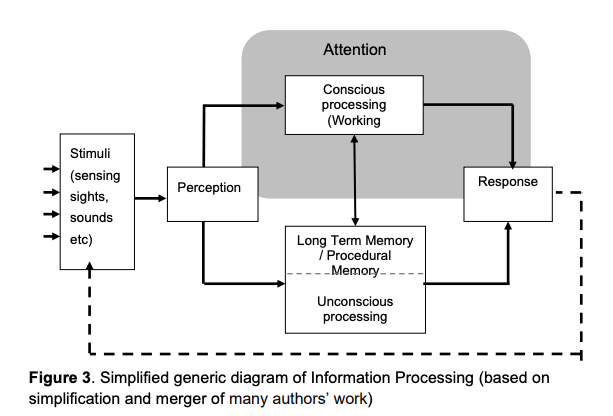
Figure 3 above is a simplified version of the overall theory for the purpose of
learning. It works from left to right except for the feedback loop (broken line).
Stimuli are perceived and the information may then pass into either conscious
processing (working memory) or automatic processing before determining a
response. There is a connection shown between conscious and unconscious
processes because conscious processing almost always draws on
unconscious processes, and unconscious processing may call upon
consciousness.
An important hypothetical type of memory is ‘long term memory’ (LTM), which
is a store of previous experiences and events. Although unconscious, it can
be accessed either consciously or unconsciously.
The concept of ‘attention’ is represented by the shaded area in Figure 3.
Attention will be discussed further in other sections because it is so
fundamental to cognition and error. Attention is also aligned with mental effort
(concentration, thinking, etc.). Conscious activities require attention and
unconscious (automatic) activities do not. All central processing involves
attention (hence it is within the shaded area).
Application of Knowledge – information processing
Information processing theory can help practitioners articulate or understand
a mental task. Consider a complex task such as a pilot having to make a
diversion decision (see the decision-making section for more specific analysis
on this decision). The decision involves input, processing, actions and
feedback. The information comes from many sources and requires conscious
processing (in working memory). A problem at any stage of information
processing could affect the outcome, for example:
▪ Sensing: Failing to hear an important radio call about the weather at
the diversion, due to turning the volume down during a critical
discussion.
▪ Perceiving: Misperception of a fuel indication (resulting in selecting an
airfield too far away).
▪ Processing: Miscalculating the crosswind vector at the diversion
airfield.
▪ Responding: Accidentally selecting a speed of 140 knots rather than a
heading of 140 degrees.
Almost all actions and operations can be analysed in this way, including quick
and simple tasks. Identifying the problem stage can help further analysis and
inform solutions.
Application to Training – information processing
Trainers must first by fully aware that information processing theory is a
simple hypothetical idea; it is not a model of the brain. For a pilot trainer,
using basic models such as information processing is very useful, and
generally safe. In practice, an understanding of information processing theory
reminds us that performing any task has several different stages, any of
which can produce an unintended consequence. An understanding of
information processing (as a hypothetical model) is generally helpful at the
applied level, and can support articulation of ideas and assessments of why
people do what they do (e.g. for classroom case studies, diagnosing events in
simulators, etc.) It is also helpful in considering the cognitive foundations of
everyday tasks, and where errors and accidents stem from.
Simply put, incoming information must be sensed, perceived, processed
(unconsciously and/or consciously), and responded to. Feedback is then
produced that re-enters the system at the input stage. Any of these stages
can go wrong.
Consideration of competencies
Information processing helps to remind us that a specific point of interest (e.g.
an error or decision outcome) usually has a larger ‘footprint’ than is obvious at
the time, and is part of a system. A vulnerability of CBTA is that, used
inappropriately, it can allow an instructor to select observable behaviours and
competencies without wider or systems considerations of the whole task
process. Consideration of information processing can help avoid this.
For example; a crew may make a seemingly poor decision (e.g. continuing
the sector after a simulated problem in the climb) and the trainer considers
the issue to be ‘problem solving and decision making’, having considered the
competencies and observed behaviours. For example, they might determine
that the crew did not identify the appropriate threats or seek adequate
information (IATA observable behaviour OB6.1) to support their
determination. But the trainer should still be open to other possibilities or
wider causal explanations prompted by a consideration of information
processing. These could include the crew not correctly perceiving the
information, the information being missed (e.g. due to issues around workload
or workload management), or the action/output being inappropriate for the
situation. Hence situation awareness, workload management, communication
or flight path management might have been even more relevant areas
(competencies) to consider, despite decision-making being the most overt
issue. Of course, in multi-crew aircraft, teamwork and leadership will also be
involved in most issues of this kind. In other words, most issues will involve
interplay between most competencies.
Information processing can remind us that the task of aircraft operation is a
system, rather than the sum of a set of quasi-independent phenomena such
as various scores on various competencies. Information processing reflects a
managed system, because changes made impact the system in which they
are made and necessitate further change. Each component is dependent
upon others. Trainers and instructors know this intuitively, but a basic
consideration of information processing can help.
An example of the systematic nature of the task could be: ‘Situation
Awareness under-pins decision making… but decision-making uses attention
and generates workload… this can impact situation awareness and therefore
impact decision-making’. Hence, by considering a human task as a system,
more competencies are drawn in and more possibilities are covered.
The trainer should therefore debrief in a way that allows a diagnosis of the
whole task (input, processing, output, feedback) to attempt to assess each
competency and their impact on other competencies. The trainer should
establish any differences between their own observation and the crew’s
picture of the situation and ask questions that attempt to uncover where the
issues occurred, and what they were.
Examples of such questions would be:
▪ “Which part of the task do you think worked well?
▪ “Did you find any part of the task difficult? Why?”
▪ “In hindsight, would you do anything differently? What/Why?”
▪ “What information were you basing the decision on?”
▪ “At [this stage] what information do you recall being most aware of?”
▪ “At this point, was there anything causing you concern?”
▪ “What information source would you have based the decision on, if
that source was unavailable?”
▪ “Did the decision feel urgent?”
▪ “Did the decision feel obvious?”
The aim of these sorts of questions would be to find out what went right and
what didn’t and ensure that the competencies are considered in a relevant
way. For example, it might have been that the crew response was appropriate
given the information the crew perceived, but the information was incomplete
or misperceived by the crew. This might draw the trainer more towards the
situation awareness competency than the decision-making competency.
Source: CAP737 Flight Crew Human Factors Handbook Feb 2023 ed.