
In Focusing On What Pilots Do Wrong, We May Be Missing Valuable Lessons From What They Quietly Do Right
This article from 2019 and published by Forbes, looks at the airline industry and discusses the value in not only studying what pilots do wrong,


This article from 2019 and published by Forbes, looks at the airline industry and discusses the value in not only studying what pilots do wrong,
Professor Sidney Dekker explains what safety differently (or the new view of safety) is. Three organisations are followed, one in resources, one in healthcare and

In this series of 3 podcasts, David Provan and Drew Rae explain the full story behind safety I and II.

In this interesting paper, Don Harris and colleagues look into the interrelationship of the various pilot competences and present their CRM dynamic model.

A useful checklist for Crew Resource Management training design.

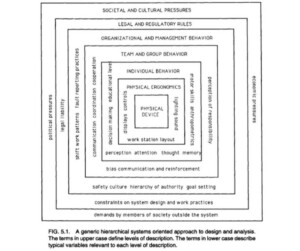
Neville Moray, professor in cognitive psychology, applied psychology and ergonomics developed this model of concentric layers, each representing a different level of description of human-machine

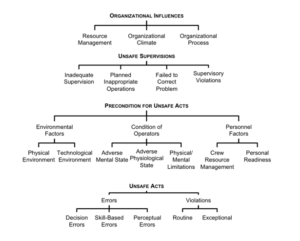
This summary of the HFACS from Skybrary introduces the reader to the basic principles of one of the most well-known and widely used human factors

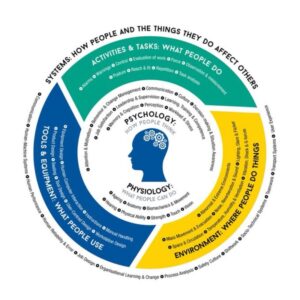
This infographic about Human Factors and Ergonomics from the UK Chartered Institute of Ergonomics and Human Factors (2018) helps to explore different kinds of Human

Source: Chartered Institute for Ergonomics and Human Factors This white paper from the Chartered Institute of Ergonomics and Human Factors explores human factors in incident

James Reason, Professor Emeritus, University of Manchester, set out 12 systemic human factors centric principles of error management in his book Managing Maintenance Error: A Practical Guide (co-written with Alan