
 Written by
 Alan Bamford FRAeS explains the power of learning from others, one of the keystones of effective CRM training. “Learn all you can from the mistakes of others. You won’t live long enough to make them all yourself.”
Source – LinkedIn
Aviation folklore is filled with quotes and adages, and most pilots should be familiar with this one. Learning lessons from accidents and incidents is a valuable form of professional development, and significant events are regularly used as case studies on Crew Resource Management (CRM) courses. During my career I’ve attended many of these courses, and I’ve often been surprised at how some of my colleagues have reacted to the mistakes of others. Statements like “I can’t believe they didn’t see that coming!” and “Completely incompetent, who gave them a job in the first place?” are not unusual. These days it is increasingly common to see incidents reported on social media, and a scroll through the comments below usually reveals similar sentiments from the general public. In this article, I’m going to discuss why we may feel this way, and how it can prevent us from doing the very thing we aspire to: learning from the mistakes of others and becoming safer pilots.
The benefit of hindsight
Human factors don’t just cause accidents, they affect the way we study and learn from them. The same cognitive biases that can impact our decision making in the cockpit also influence our assessment of other crew’s actions.
When we discuss an accident, we see an obvious chain of events leading inexorably to disaster. But if the signs were there, why didn’t someone act on them? Herein lies the problem of hindsight bias. Humans have a natural tendency to organise events into a neatly structured narrative [1]. Unfortunately, the situations that lead to accidents are anything but well structured. They are complex scenarios riddled with ambiguity and other beguiling human factors. Furthermore, information we consider significant with the benefit of hindsight is just that. It may not have seemed significant at the time. In fact, accidents usually happen because something important wasn’t obvious.
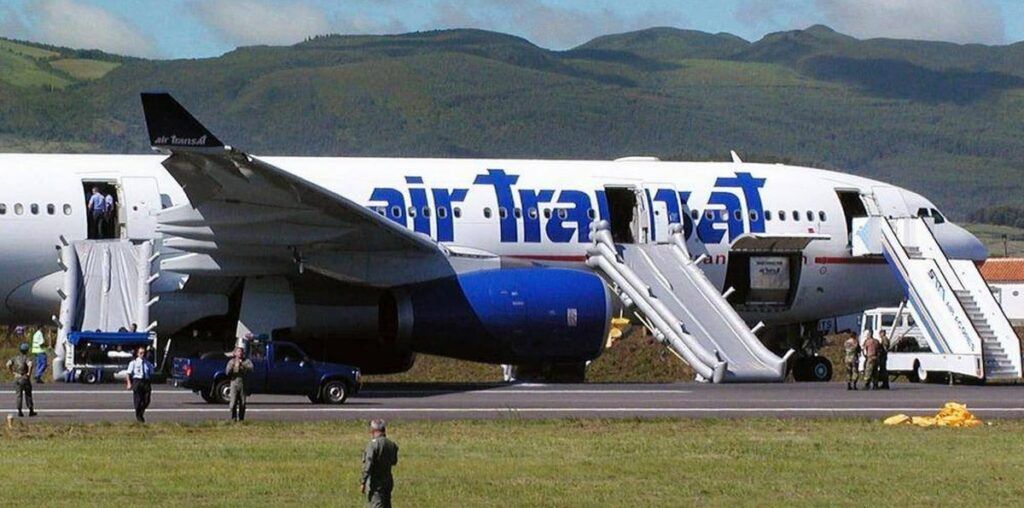
Hindsight can also lead us to focus on the technical cause and downplay the human factors. Mention a well-known accident to another pilot and they’ll often respond with something like “ahh, I remember, that’s the one where they should have realised this and done that.” This way of thinking isn’t wrong, as it does yield some learning points. However, the technical causes of accidents are normally addressed by changes in hardware, procedures or regulations while the human factors are enduring and continue to contribute to undesirable outcomes. Air Transat flight 236 is a good example [2]. This Airbus A330 crew experienced a massive fuel leak from their right engine while mid-Atlantic, manifested as a series of unusual engine indications followed by an unexpected fuel imbalance. In the absence of an explicit indication of a fuel leak, they attempted to correct the fuel imbalance by opening the cross-feed valve. This allowed fuel from the unaffected left tank to escape via the leak. The crew were aware of the rapidly reducing fuel quantity but believed it to be an indication problem. They did not appreciate the gravity of the situation until the engines flamed out due to fuel exhaustion. It would be easy to see this event as “the one where they should have known they had a fuel leak and not opened the cross feed”. However, Airbus quickly revised procedures and training to ensure crews were adequately prepared to diagnose and mitigate fuel leaks. This makes a similar event unlikely and I believe the real lesson is the value of resolving ambiguity and fully diagnosing problems before taking action.
Cognitive dissonance
Suppose you have two options and can only pick one. These could be job offers, holidays, plans for the weekend or simply what to make for dinner. If you like both more or less equally, you’re likely to feel uncomfortable when you think about the option you rejected. This feeling is cognitive dissonance; the mental struggle to reconcile two conflicting beliefs [3]. In this example, the conflict arises because you rejected something you liked in favour of something else. Since you can’t change your decision, you may unconsciously change your beliefs to reduce the dissonance. You convince yourself you didn’t really want to do it anyway.
How is this relevant? Imagine how you feel when watching an episode of Air Crash Investigation. There’s always a scene introducing the flight crew, when the narrator explains they were both well trained, highly experienced and had unblemished records. Similarly, the introduction to any accident report will usually state that the crew were suitably experienced, appropriately trained and properly licenced for the flight. In short, they look just like us. Since most of believe we are “safe” pilots, this creates a conflict. How can we reconcile our belief of competence with the observation that a very similar crew were involved in an accident? You may distance yourself from those involved, forming the idea that there are “safe” pilots who don’t crash and “unsafe” pilots who do. While there is a good psychological reason for this, it’s still a mistake.
While researching this article, I reviewed countless accident and serious incident reports. Bar a few outlier events (Crossair Flight 3597 being the best example I could find [4]), there is nothing to suggest any significant concerns had been raised about any of the crew members involved prior to the event. The unsettling conclusion is the vast majority of accident crews aren’t outliers. Until disaster strikes, they are regular pilots like you and I, with high professional standards and good training records. Rather than distancing themselves from their actions, we should see them as a reminder of our own human frailties. Most accidents represent the odds of the average crew getting it wrong.
The power of culture
There is another bias that affects the way we judge the actions of others. It’s called the actor-observer effect. When we evaluate our own behaviour, we generally attribute our actions to the situation or circumstances. When we try to explain the mistakes of others, we are often not aware of these factors and so are more likely to blame the individual [5][6]. This brings me to a very important point: the context in which actions and decisions are taken is crucial and cannot be overstated. We may not like to admit it, but we are all heavily influenced by the culture in which we work. However, unlike standard operating procedures and training syllabi which are documented in black and white, organisational culture is hard to define and even harder to document. Many of these nuances are lost in the aftermath of an accident. The loss of the Space Shuttle Challenger is a classic example of how failure to understand culture can completely alter our perception of an event. This disaster is often explained in terms of deviance, as a failure of NASA managers to follow procedures and heed warnings. However, the eminent sociologist Diane Vaughan has convincingly argued the real cause was actually compliance with organisational customs and bureaucratic practices that normalised safety issues [7].
Lessons from history
If it is easy to overlook the cultural and contextual factors at work in recent events, we need to be extra careful when considering case studies from a different era. A series of tragedies in the seventies and eighties forced the industry to move away from the flawed concept of “pilot error” and wake up to human factors. CRM is now so integral to commercial aviation that events such as the Tenerife Disaster may seem incomprehensible to many pilots. While there is no escaping from the fact these events weren’t acceptable outcomes, and the crews involved must still bear some accountability, they are understandable in the context of the culture, knowledge and training methodologies of the day. In these less enlightened times, we not only failed to understand human factors but threw those who fell victim to them under the bus. The classic example is British Midland flight 92, known to many simply as “Kegworth”.

Following the loss of an engine fan blade, the crew shut down the wrong engine. The damaged engine failed on approach and the aircraft crashed short of the runway. To many this was an open-and-shut case of “pilot error”, but the investigation revealed a complex web of human factors [8]. This crew were presented with an unforeseen combination of symptoms viewed through new and unfamiliar engine instrumentation. They faced several challenges, including time pressure, high workload, ambiguity and automation handling issues and through no fault of their own didn’t have the tools to manage them. Any one of us could make the same errors without modern CRM techniques in their toolbox. Taking the argument a stage further, there are undoubtably things we do today that we won’t be doing in ten or twenty years’ time. The challenge is to find out what they are before it’s too late. We don’t know what we don’t know.
Informed and aware but not immune
So how do we avoid these biases and extract the most valuable learning points? Start by getting your information from the source documents rather than the media. Most journalists aren’t intentionally misleading, but they do have to condense lengthy reports into articles their audience want to read. This means simplifying a complex event into a concise narrative with a clear conclusion. The role of everyone involved needs to be explained, and this often means allocating them the role of hero, villain or innocent victim. This is exactly the kind of simplification we want to avoid. Reports of major accidents can stretch into hundreds of pages, but they give you the opportunity to review the evidence and draw your own conclusions.
When you read an original report, you’ll notice a statement that the objective of the investigation is to prevent further accidents or incidents, not to apportion blame or liability. It’s important you take the same approach. To understand what happened, put yourself in the crew’s shoes. What did they know (or not know) at the time? What training and previous experience did they have? And what kind of culture did they operate in? You are not should place an overall judgement on any of the people involved. Instead, evaluate each decision or action separately and see if there are any learning points. Even in when mistakes are made, there will be positives and vice versa. Remember the Air Transat A330 we discussed earlier? After both engines failed, they showed remarkable resilience and skill by gliding the aircraft to successful landing in the Azores [2].

When drawing conclusions, try to learn the most general lesson possible. This applies to your own mistakes as well as other people’s. A technical fix will stop the same problem occurring again, but understanding the human factors will lead to lessons that can be applied in other situations. This could be improving your workload management, identifying and resolving ambiguity or recognising your personal signs of overload.
Finally, a couple of cautionary tales. The first is simple. If you ever find yourself thinking “this couldn’t happen to me”, think again. In most cases there is nothing to differentiate accident pilots from non-accident pilots.
The second is more complicated and unsettling. In his highly influential book Thinking, Fast and Slow, Daniel Kahneman ponders the futility of teaching Psychology. Several studies have shown that learning about cognitive biases doesn’t prevent us falling victim to them. We can recall interesting facts about humans in general but this knowledge doesn’t alter our behaviour [9]. Only personal experiences that highlight weaknesses in your own methods will do this. Coming back to the quote we started with, you will have to make some mistakes yourself after all!
References:
1. Turner, B.A. (1978). Man-Made Disasters. Wykeham Science Press, London.
2. Portuguese Aviation Accidents Prevention and Investigation Department (2004) Accident Investigation Final Report – All Engines-out Landing Due to Fuel Exhaustion, Air Transat, Airbus A330-243 marks C-GITS, Lajes, Azores, Portugal, 24 August 2001. Available at www.fss.aero/accident-reports/dvdfiles/PT/2001-08-24-PT.pdf(accessed June 29, 2020).
3. Festinger, L. (1957). A theory of a Cognitive Dissonance. Stanford University Press, California.
4. Aircraft Accident Investigation Bureau (2002). Final report No. 1793 by the Aircraft Accident Investigation Bureau concerning the accident to the aircraft AVRO 146-RJ100, HB-IXM, operated by Crossair under flight number CRX 3597, on 24 November 2001 near Bassersdorf/ZH. Available at www.sust.admin.ch/inhalte/AV-berichte/1793_e.pdf (accessed June 29, 2020).
5. Cherry, K. (2020). Actor-Observer Bias in Social Psychology [online]. VeryWellMind. Available at www.verywellmind.com/what-is-the-actor-observer-bias-2794813 (accessed June 29, 2020)
6. Bordens, K. S. & Horowitz, I. A. (2013). Social Psychology. Psychology Press, New York.
7. Vaughan, D. (2016). The Challenger Launch Decision: Risky technology, culture and deviance at NASA. University of Chicago Press, Chicago.
8. Trimble, E. J. (1990). Report on the accident to Boeing 737-400, G-OBME, near Kegworth, Leicestershire on 8 January 1989. Air Accidents Investigation Branch. Available at www.gov.uk/aaib-reports/4-1990-boeing-737-400-g-obme-8-january-1989 (accessed June 29, 2020).
9. Kahneman, D (2011). Thinking, Fast and Slow. Penguin Books, London.